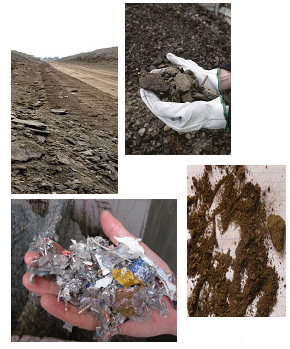
The combustion industry is increasingly focusing on reducing costs through use of AFR and petcoke and where possible, raw materials substitution.
CINAR simulates, designs and installs combustion and incineration equipment, burners and control packages. These activities include conventional aspects of fuel utilisation, environmental impact and economic considerations of heat conversion systems, as well as novel methods of substituting waste/biomass derived fuels for heat recovery.
Alternative fuels, characterised by a very broad range of physical and chemical properties, are utilised depending upon their availability, transportation and quantities (i.e., waste wood chips, tyre chips, whole tyres, plastic disks, diaper cubes, liquid waste and oils).
These fuel variables require extensive planning and permitting exercise. CINAR regularly assists its clients via simulations as a function of potential changes to plant and operational conditions in order to assess perceived emissions and process implications.
CINAR can optimise the combustion of AFR by assessing, best AFR injection locations, prefered fuel mix, deposit build-up potential, loss on productivity, as well as impact on NOx, alkali and sulphur cycles, damage to refractory lining, creation of localised hot-spots and unstable kiln operation.
Thus CINAR can reveal the potential of thermal substitution rates of AFR and for a variety of plant designs, it has shown that up to 90% thermal substitution of AFR can be achieved.